

The Dalmatian Pelican, beyond being an iconic species of the Greek wetlands, has also served as a source of inspiration for educational activities both in the classroom and in nature. Through a series of initiatives under the Pelican Way of LIFE Project, we created unique experiences for students and educators alike. Specifically, we developed educational material dedicated to the Dalmatian Pelican, conducted two seminars for teachers, organized a student trip to the Danube Delta, launched the first-ever Vlogging Academy for students and carried out numerous educational activities in schools located in areas where Dalmatian Pelicans live. In total, more than 622 children and 96 adults from 19 schools participated in our activities, actively contributing to raising awareness and fostering a deeper connection with the Dalmatian Pelican and its natural habitat.
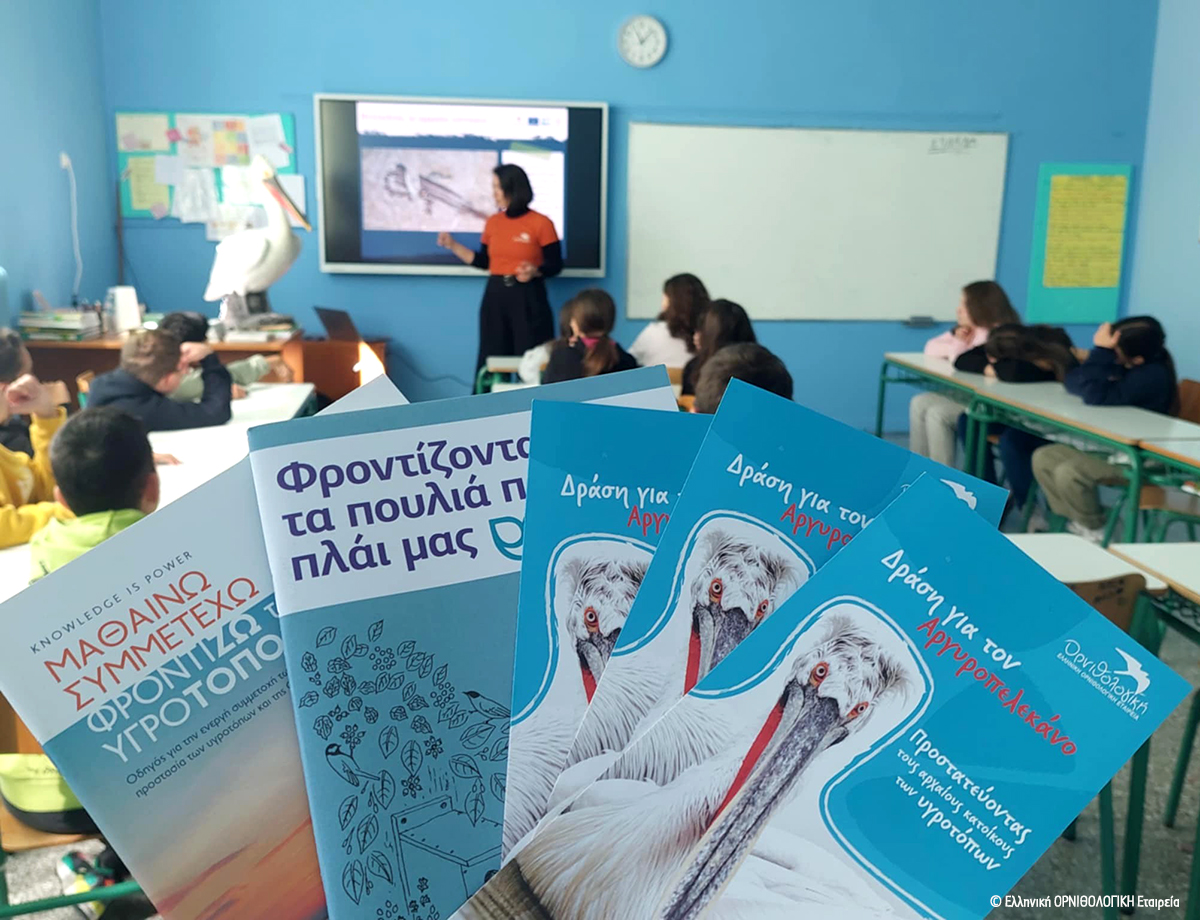
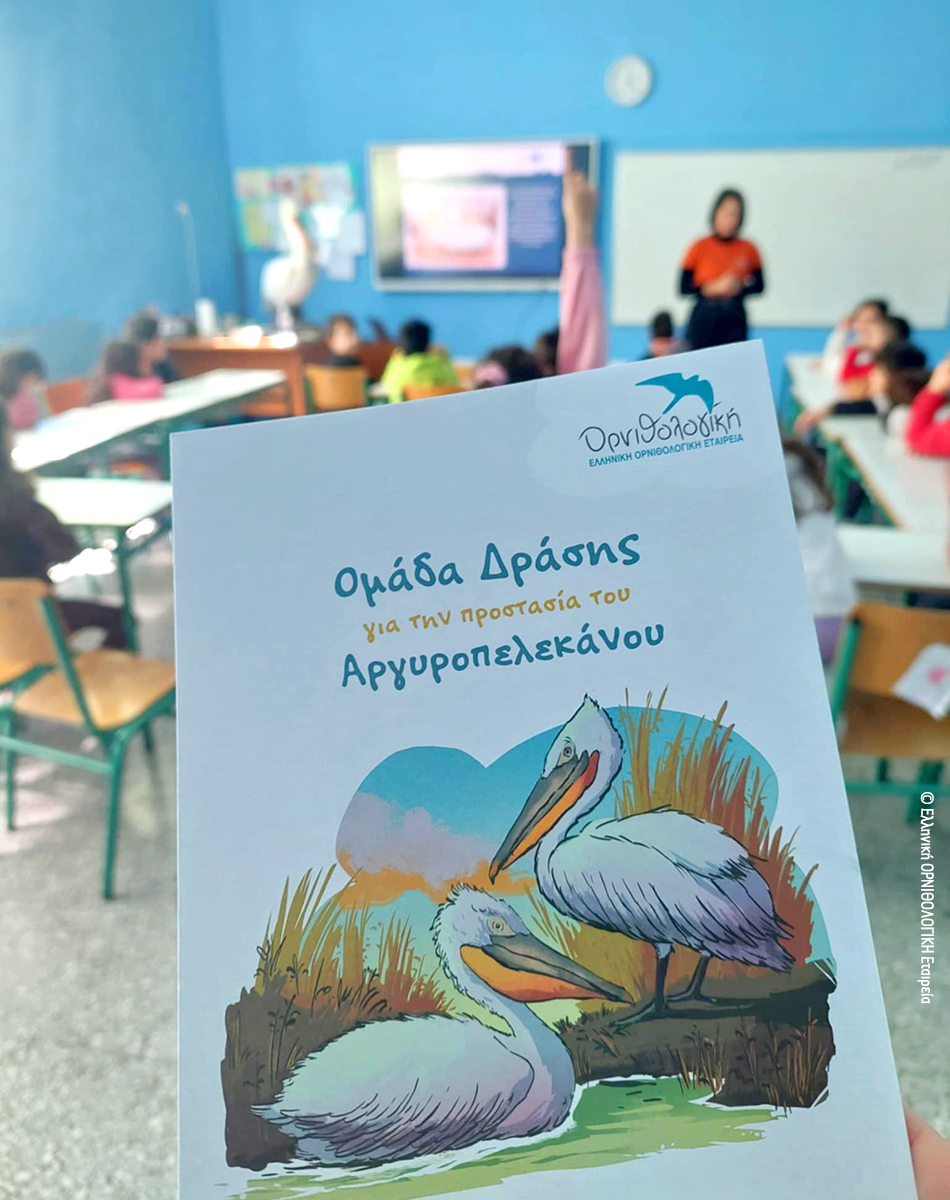
In 2022, during the first year of implementing the educational program, we completed the production of the digital Environmental Education material titled “Dalmatian Pelicans: Ancient Inhabitants of the Wetlands”, designed for children aged 9–15. Our goal is to create a network of partner schools that will apply this educational material and engage in hands-on, experiential activities. To promote and implement the educational content, two training seminars were held for teachers. The first took place in March 2022 in the region of Messolonghi, with the participation of 13 educators, who learned about the unique characteristics and threats faced by Dalmatian Pelicans and applied related activities both in the classroom and outdoors. The second seminar was held in a similar manner in March 2023 in the Amvrakikos Gulf, with the participation of 20 educators.
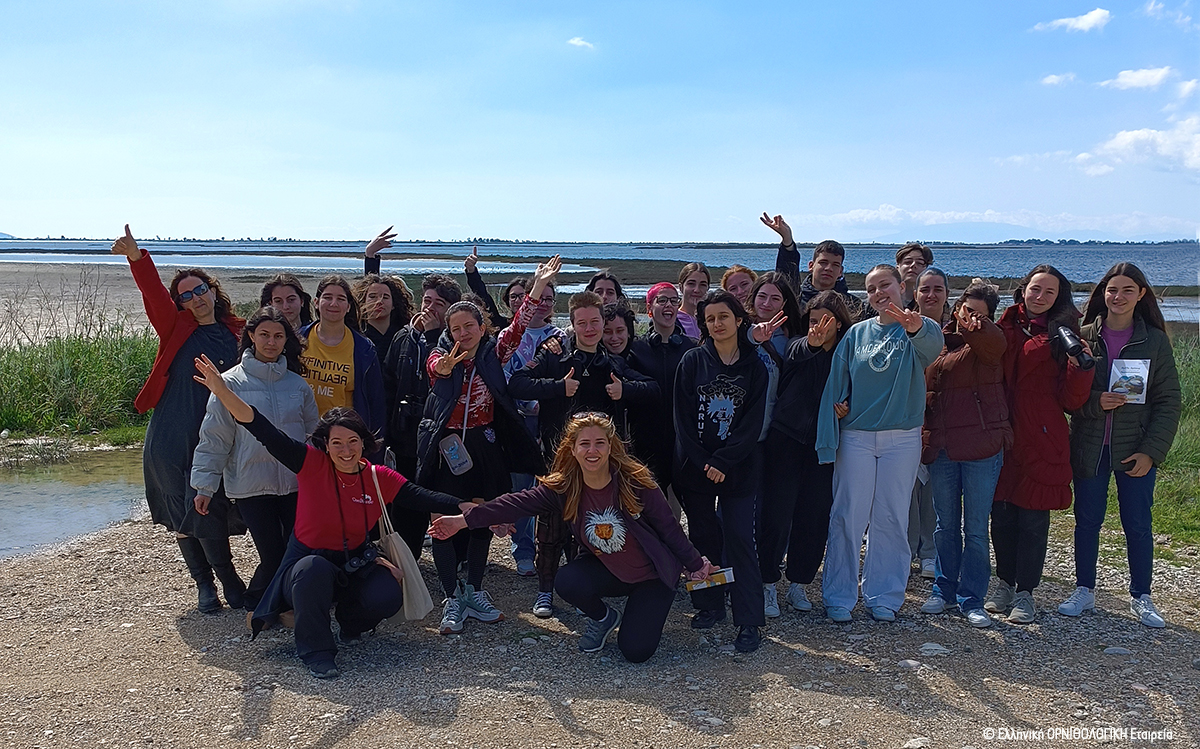
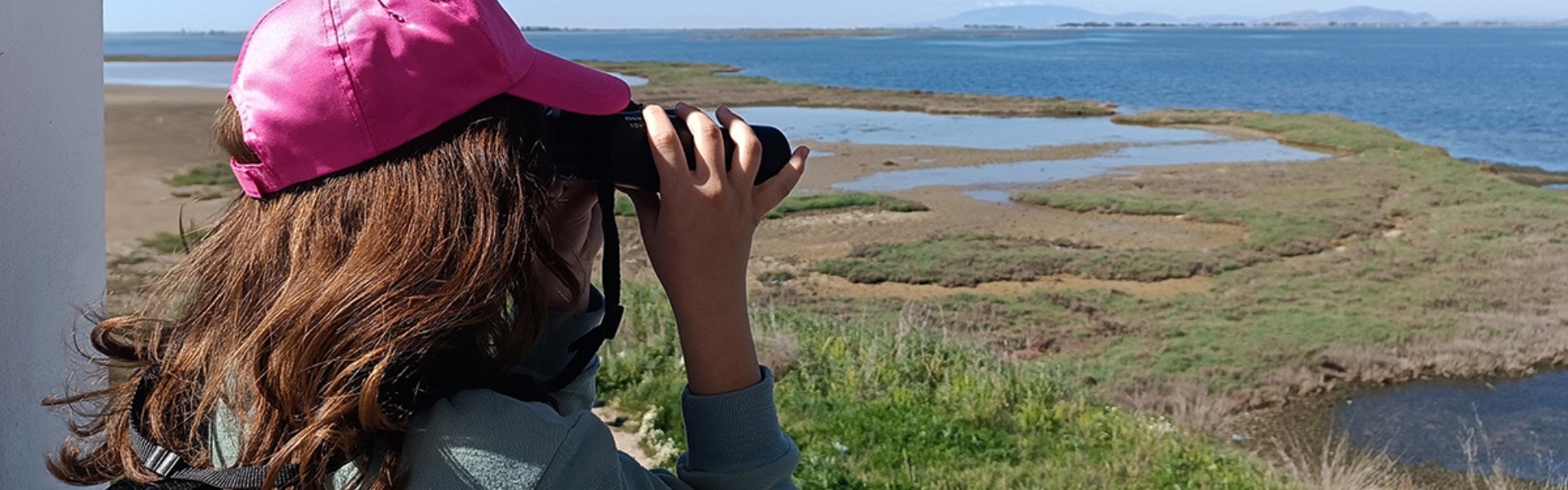
The year 2023 was full of unique and meaningful activities. We began by celebrating World Wetlands Day (February 2nd) in collaboration with the Environmental Education Center of Lefkada, with the Dalmatian Pelican taking center stage. The event was held at the Gyra Lagoon in the town of Lefkada. A total of 67 students from the 5th and 6th grades of the 2nd, 3rd, and 4th Primary Schools of Lefkada explored the biodiversity of wetlands, engaged in outdoor environmental activities, and became birdwatchers at one of the Dalmatian Pelicans' feeding sites in western Greece.
In March of the same year, we organized an outdoor event with the students of the Peta Primary School in Arta. The teachers had already introduced the Dalmatian Pelican to their students at the beginning of the school year, using our educational material as well as creating their own original activities. One such example was transforming the Dalmatian Pelican into a water-type Pokémon. Named “Pelipper,” the children created a character that embodies the anatomical and behavioral traits of the real species! We had the pleasure of meeting the students in person and introducing them to the pelicans in their natural habitat through nature-based activities and birdwatching using binoculars and spotting scopes in the Amvrakikos Gulf. We hope that combining new technologies with direct contact with nature lays the foundation for fostering a sense of care and responsibility for wildlife, keeping education relevant and aligned with the modern era. The entire school participated in the program—67 children and 8 accompanying teachers.
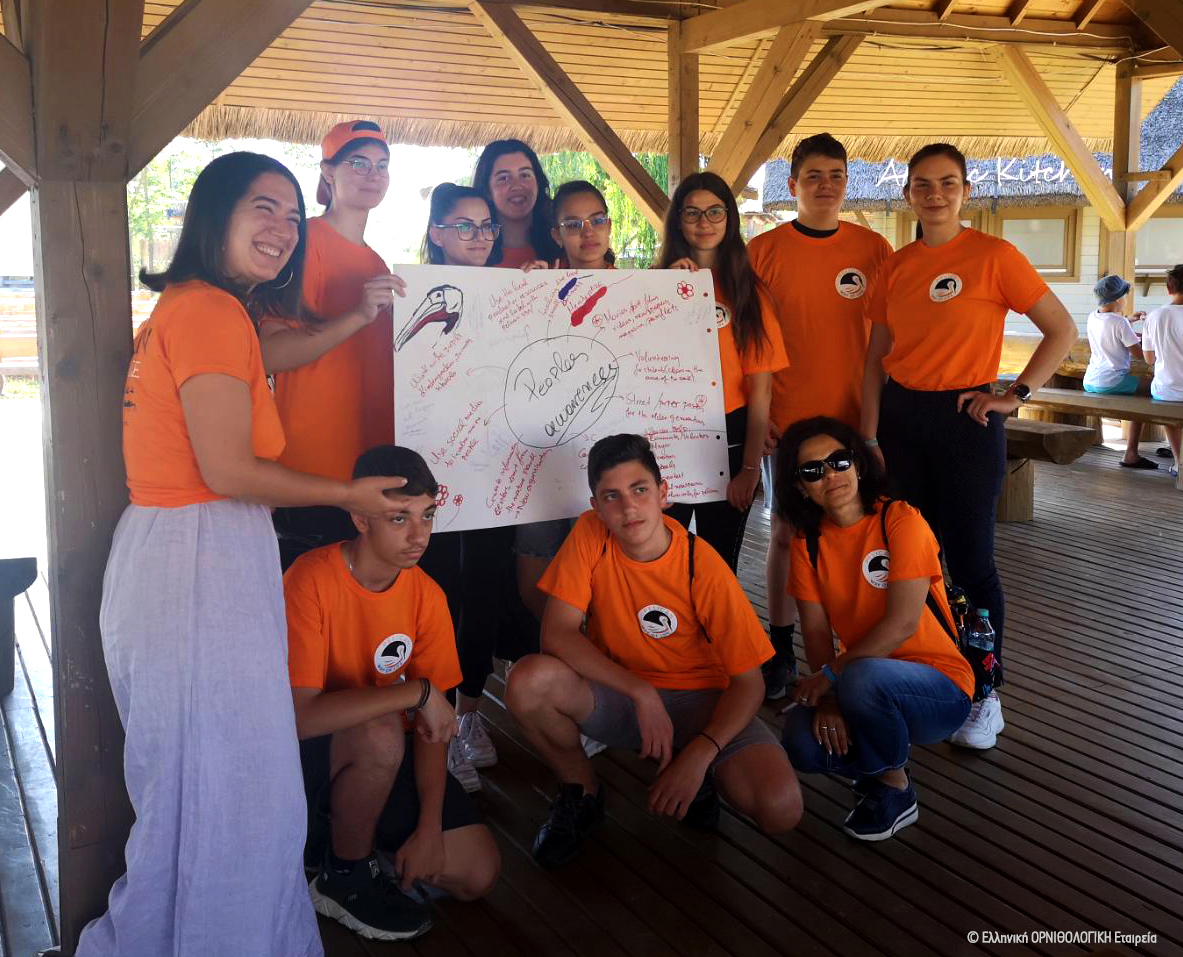
Shifting both the educational level and geographical context, we discovered that the Dalmatian Pelican can serve as a symbol of intercultural education and as a starting point for a holistic approach to environmental issues. At the 5th Junior High School of Arta, four students were selected to participate in the Dalmatian Pelican cross-border summer camp in Romania. After attending our educational seminar, the school’s principal integrated the educational material into the students’ quarterly projects, leading them to a truly unique experience. At the summer camp, more than 40 young people from Greece, Bulgaria, Romania, and Ukraine came together, exchanged ideas, and got to know the Dalmatian Pelican through hands-on activities. They created their own proposals for wildlife protection and imagined future business ventures inspired by this iconic species.
Our final actions for 2023 took place in October in Messolonghi, where four school events were organized in collaboration with three local kindergartens and one Special Education School. A total of 90 children participated, learning about Dalmatian Pelicans through storytelling, drawing, observation, and play.
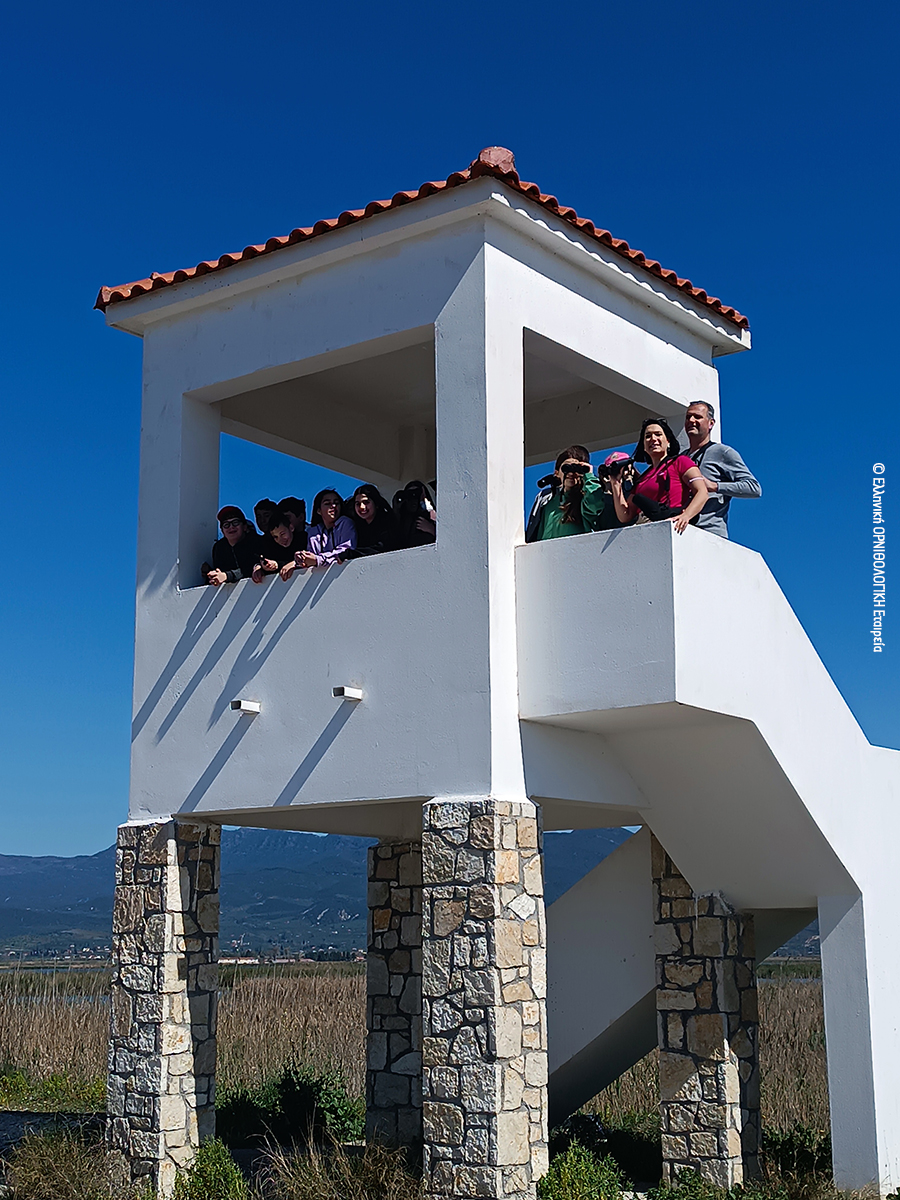
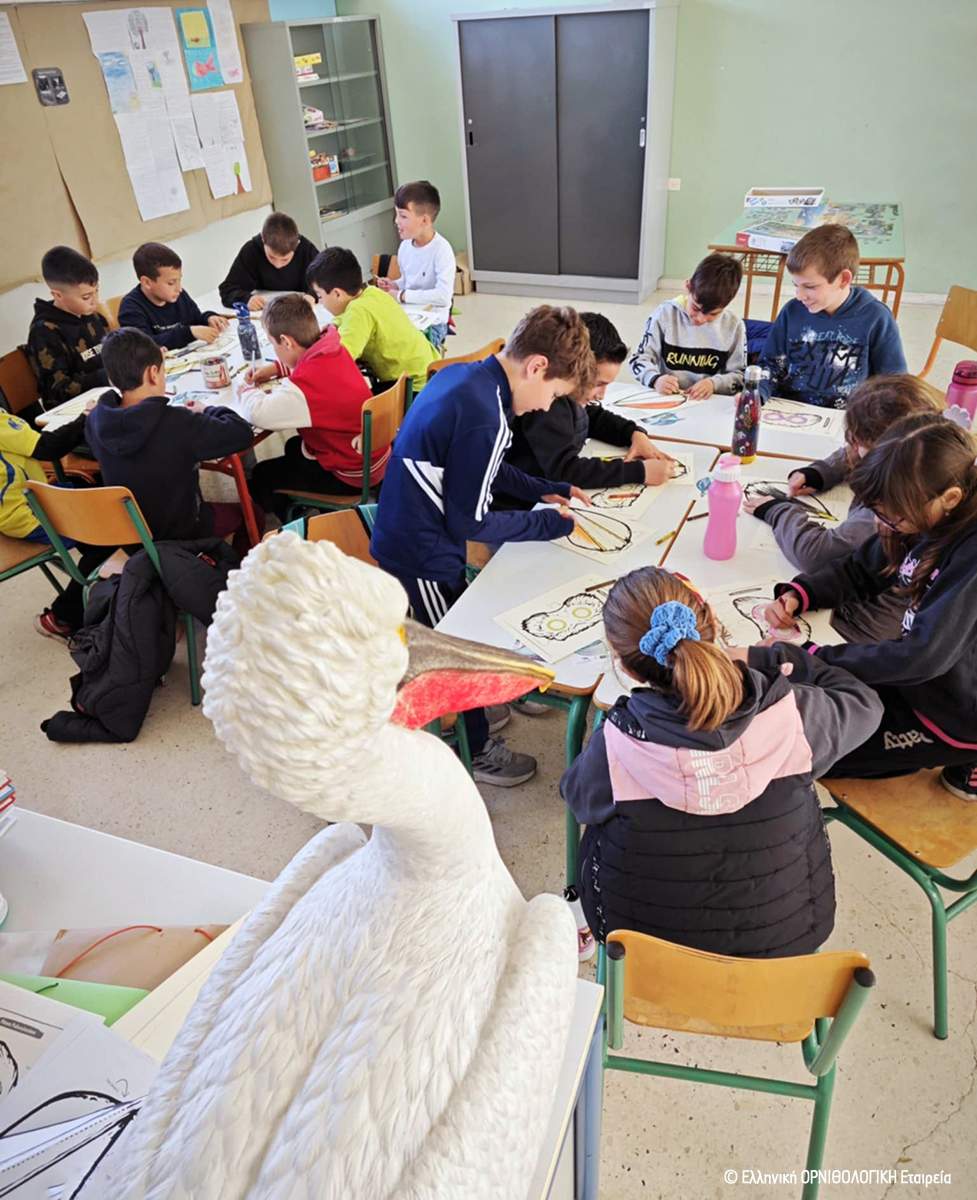
The educational activities for the protection of the Dalmatian Pelican continued with new school partnerships in 2024. The 1st Primary School of Messolonghi, the environmental team of the 1st Junior High School of Messolonghi, and the Messolonghi Art Junior High School joined the Student Action Group for the protection of the species, with the participation of 218 students and 20 educators. The two junior high schools took part in a three-month project, focusing on the creation of vlogs as part of the Vlogging Academy—an innovative initiative by the Hellenic Ornithological Society (HOS) that merges education with digital media. Guided by the HOS Educational Team and supported by Messolonghi by Locals, the students produced eight (8) videos dedicated to the protection of the Dalmatian Pelican. These videos are available on the HOS YouTube channel. Through the active involvement of students, the Vlogging Academy continues to inspire young people and promote environmental awareness through creative digital storytelling.
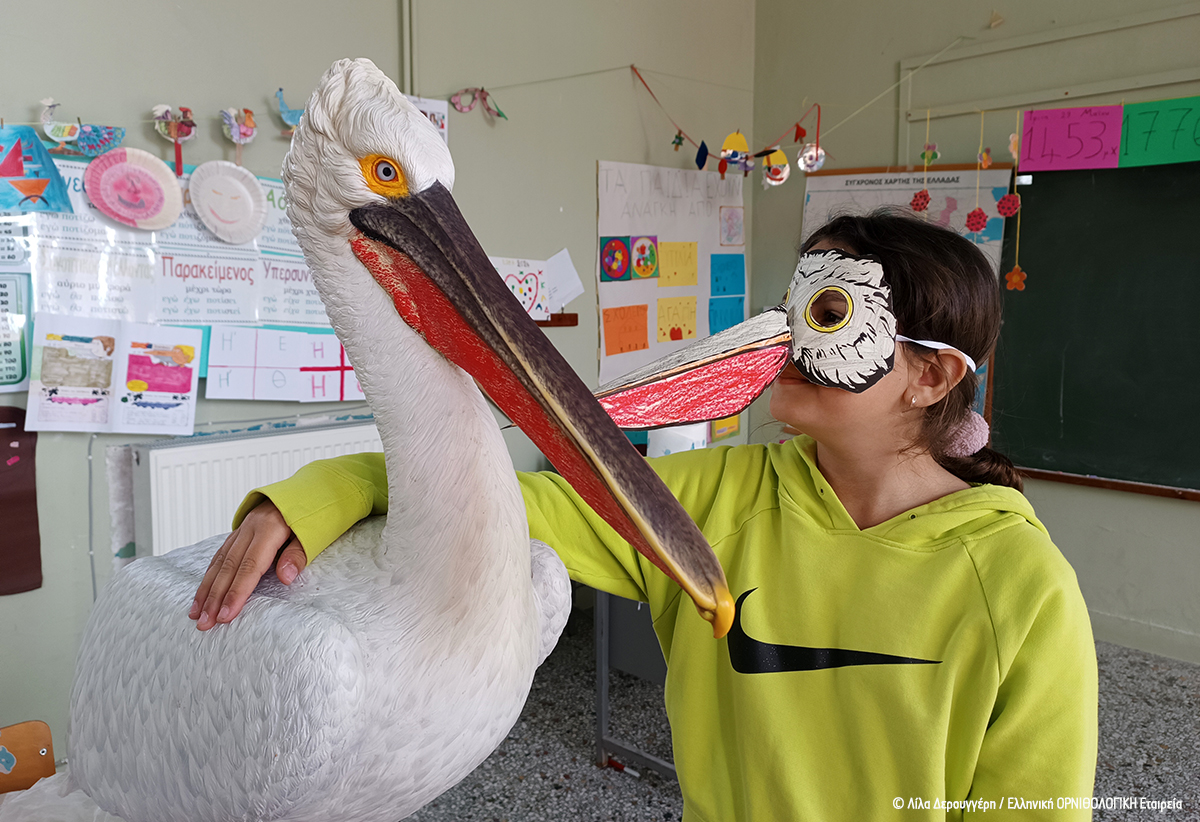
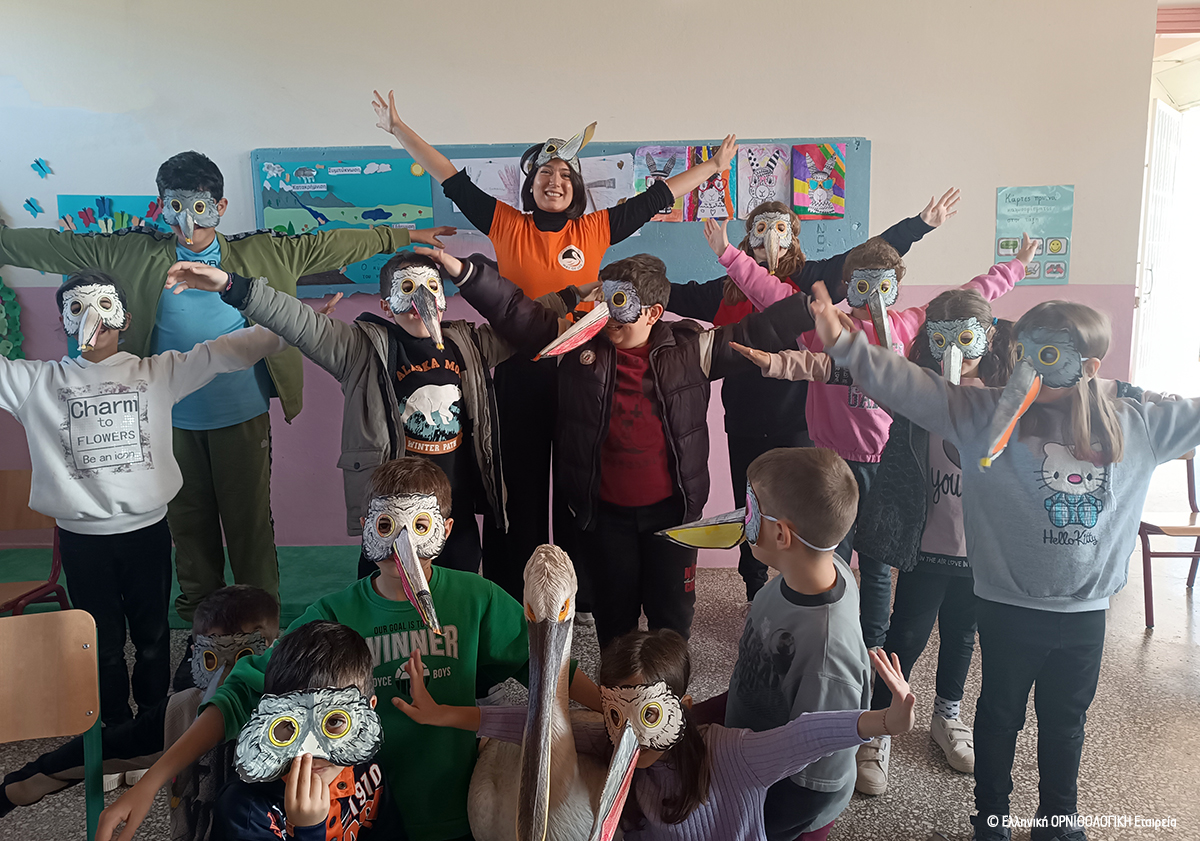
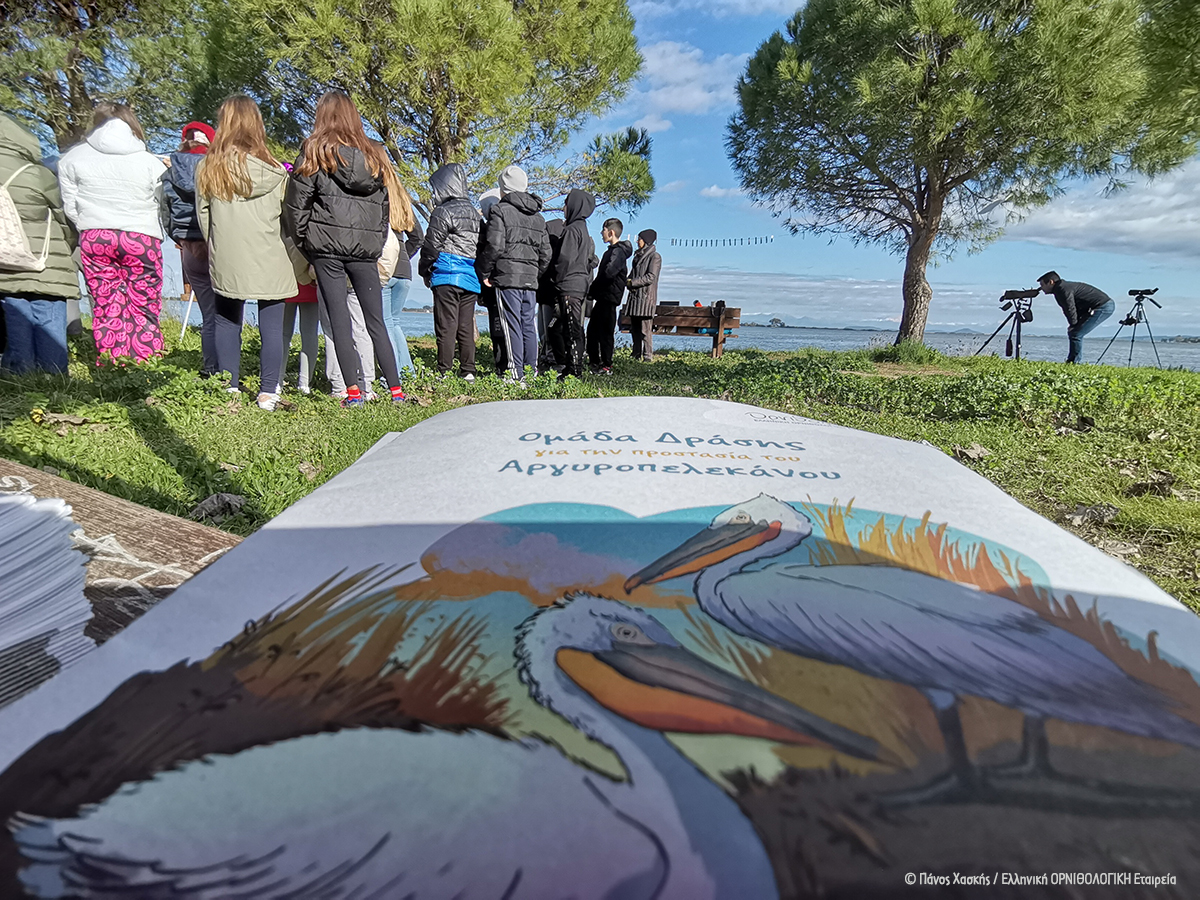
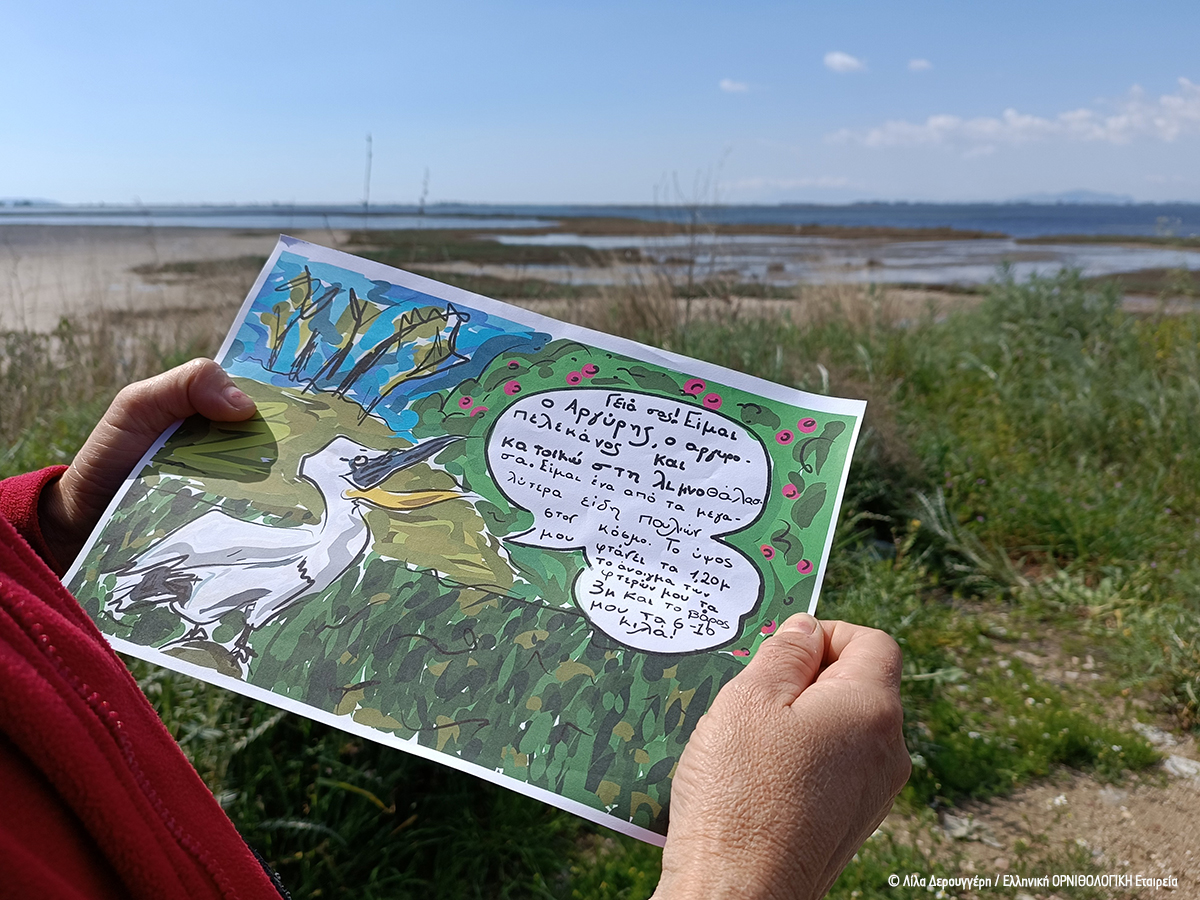
The Dalmatian Pelican continues to make new friends, and the Student Action Group for its protection keeps growing! Together with “Argyris,” a life-sized pelican model, we visited seven (7) schools in Messolonghi and the Amvrakikos Gulf region, welcoming more than 180 children into the Student Action Group. Through birdwatching activities in the Messolonghi Lagoon and hands-on, experiential learning, the students discovered the world of the Dalmatian Pelican, the threats it faces, and the importance of protected areas. As the children themselves said, “It’s fun to learn without bells and classrooms!”—and we look forward to our next meeting at the wetland.
These activities for the protection of the Dalmatian Pelican continue to bring together schools and students, fostering environmental awareness and active youth engagement. Through these experiences, students gain knowledge and values that will accompany them throughout their lives, promoting a sustainable mindset and approach to action for the future.
The Environmental Education activities were carried out within the framework of the Pelican Way of LIFE Project, titled “Conservation of the Dalmatian Pelican along the Black Sea–Mediterranean Flyway” (LIFE18 NAT/NL/000716). This international initiative brought together seven organizations from five countries, all working toward a common goal: the protection of the globally threatened Dalmatian Pelican (Pelecanus crispus) in Europe and beyond.